Cars & restoration
Repatriating and Restoring a 1994 Toyota Supra Twin Turbo
It started with regretting selling my red UK-spec 1994 Toyota Supra Twin Turbo before I moved to the US. I’d loved that car, and finding another one wasn’t getting any easier. Supras seemed even harder to find in the US, and prices kept climbing.
Then, one day browsing PistonHeads, I spotted an auction with just one day left: a left-hand-drive Supra in the Cotswolds. Originally from California. It almost seemed like fate.
I bid, paid rather more than I’d anticipated, and won. It still seemed like a deal. Now I just had to get it home!
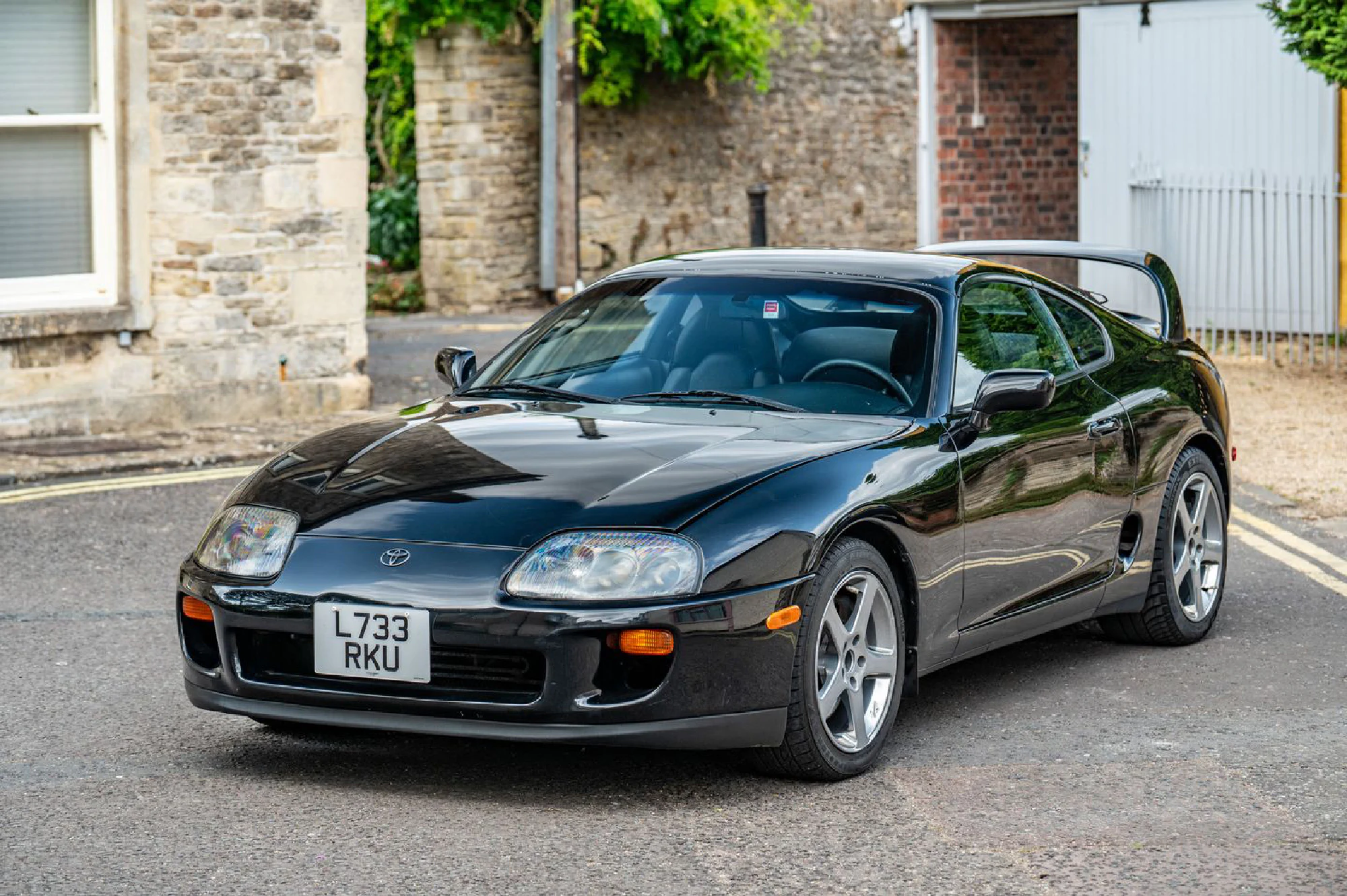
Another MkIV Supra
I already had a quick trip to the UK planned, so collecting the car became part of the itinerary. After flying over, I took a train to Malmesbury, a lovely town in the Cotswolds.
The previous owner was a wonderful guy and a record producer who’d worked with Roxy Music, The Smiths and B.B. King, among others. He’d bought the car in LA in 1999, taken it to Louisiana, and eventually shipped it back to the UK when he retired. This Supra had already done quite a bit of travelling.
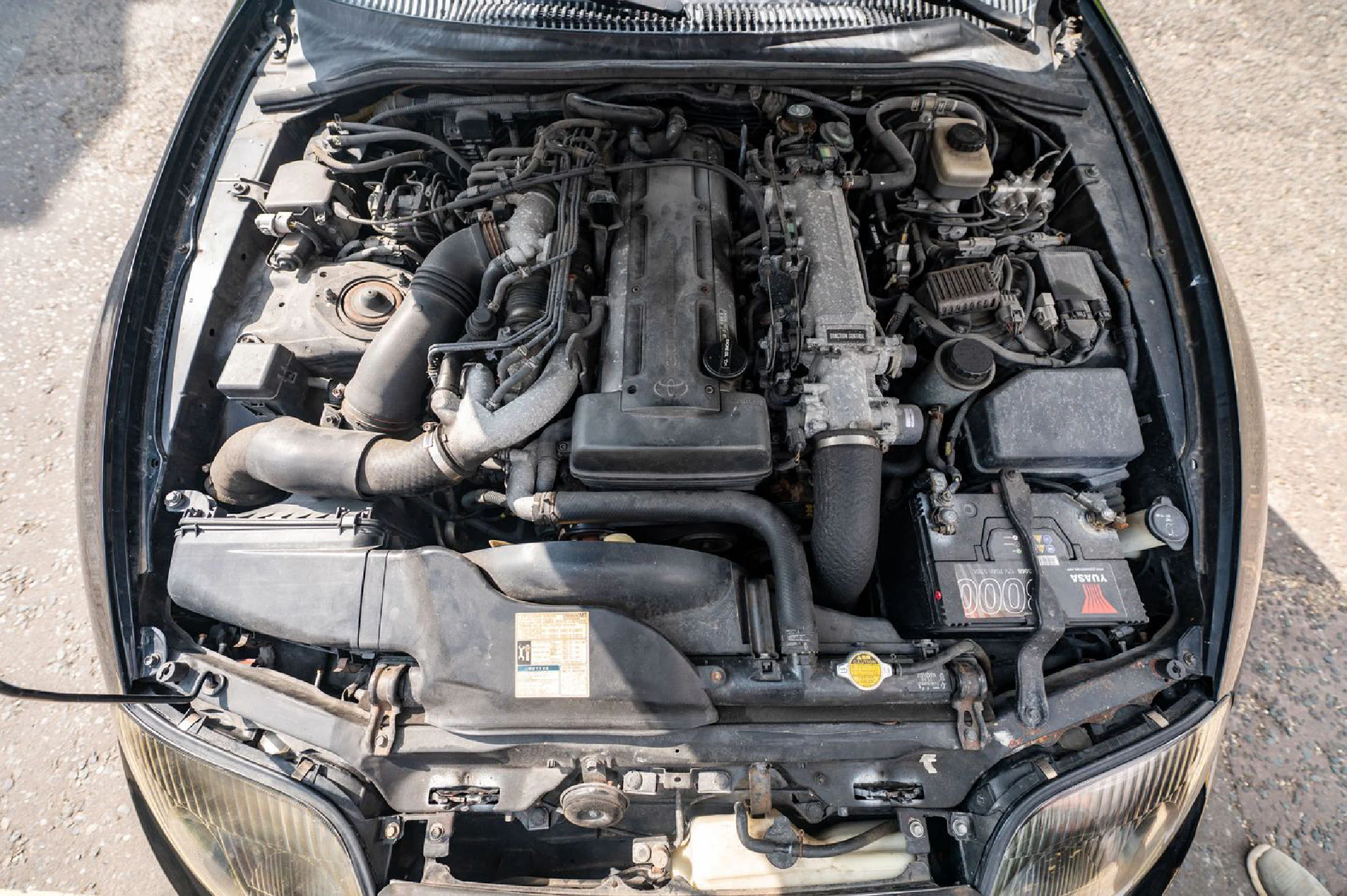
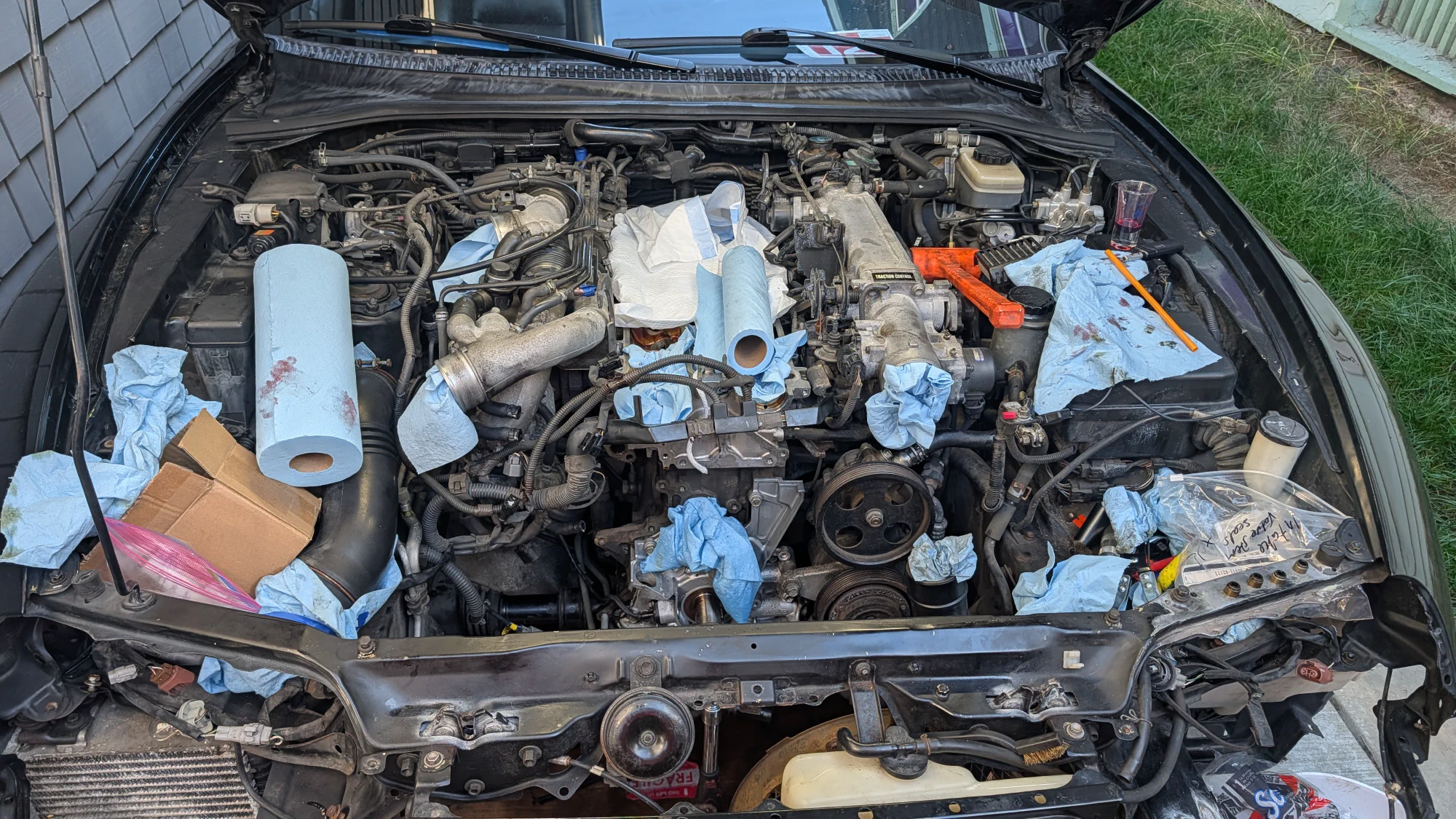
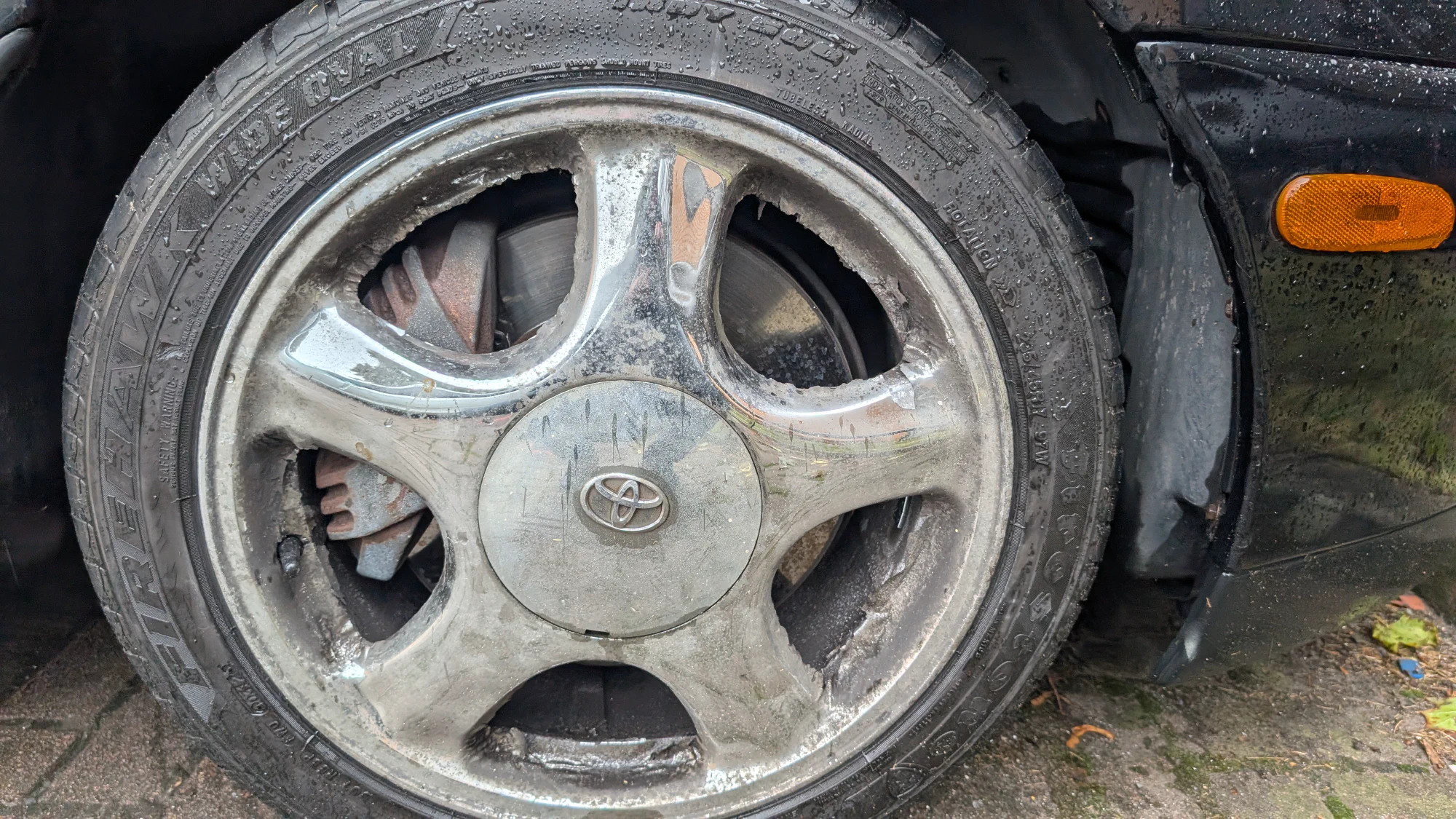
It was sold as-is, and given the timing and my circumstances, I hadn’t been able to arrange an inspection before bidding. It ran reasonably well, but was definitely rough around the edges. The chrome was peeling off the wheels, the engine bay had decades of grime, and there was plenty of deferred maintenance. I was now the owner of another MkIV Toyota Supra, along with a fairly substantial to-do list.
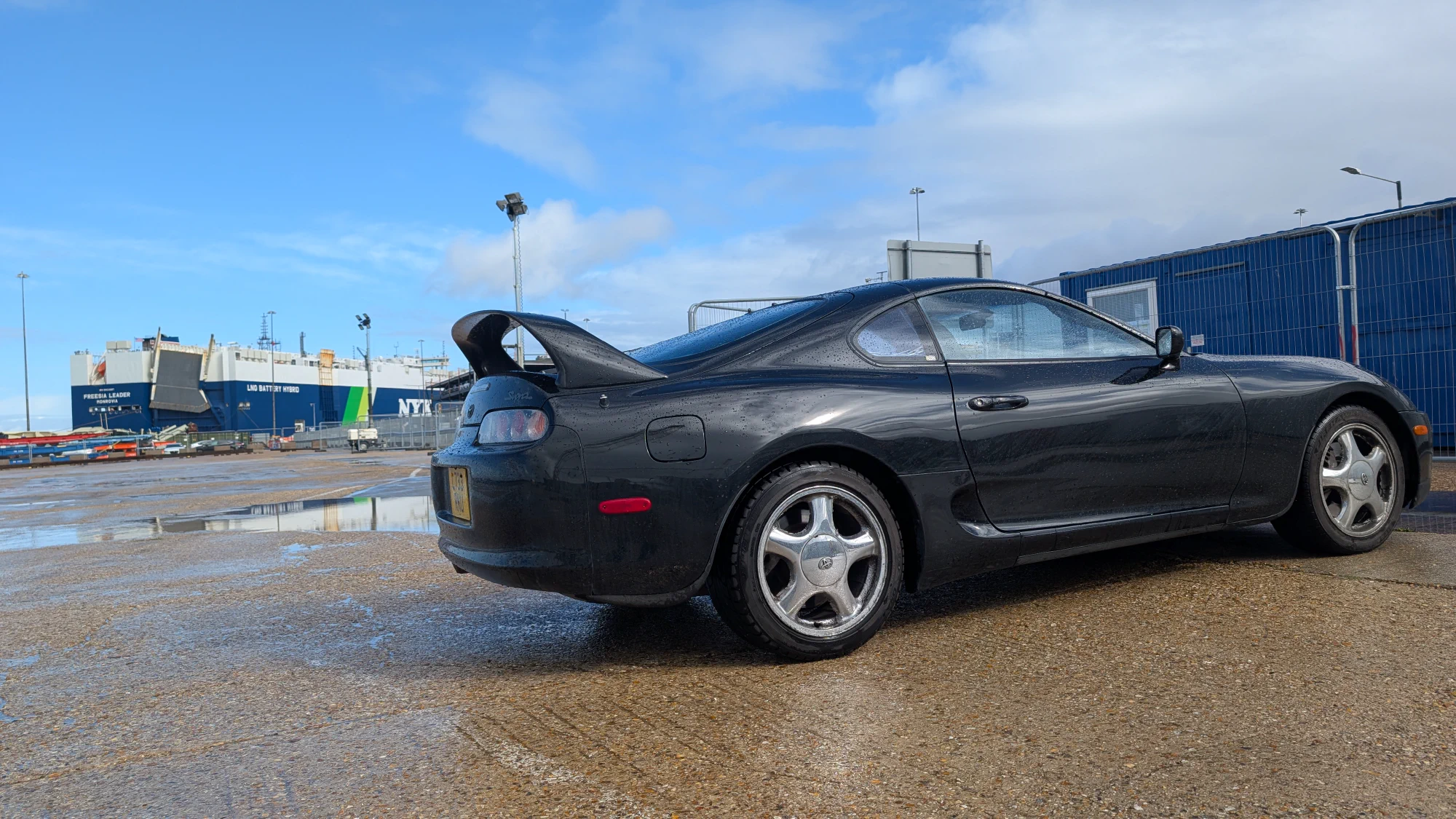
Southampton, in torrential rain
Autoshippers had already booked the car a place on a car carrier from Southampton to Port Hueneme, near Oxnard in California. I’d looked at shipping to Oakland, but the options I found were container services that would have been slower and more expensive. Since the car ran, a roll-on, roll-off carrier seemed reasonable.
After a night in Malmesbury, I drove down to Southampton. The rain was torrential, and at one point the wipers seized while I was on the motorway. A pretty terrifying introduction to the car’s maintenance needs.
We eventually made it to Southampton. The following morning I delivered the Supra to the port, where it sat alongside hundreds of new cars and heavy machinery waiting to be shipped overseas.
The crossing took roughly two months aboard the Hestia Leader. I patiently tracked its progress on VesselFinder: across the Atlantic, through the Panama Canal and up the West Coast. There wasn’t much else to do but wait.
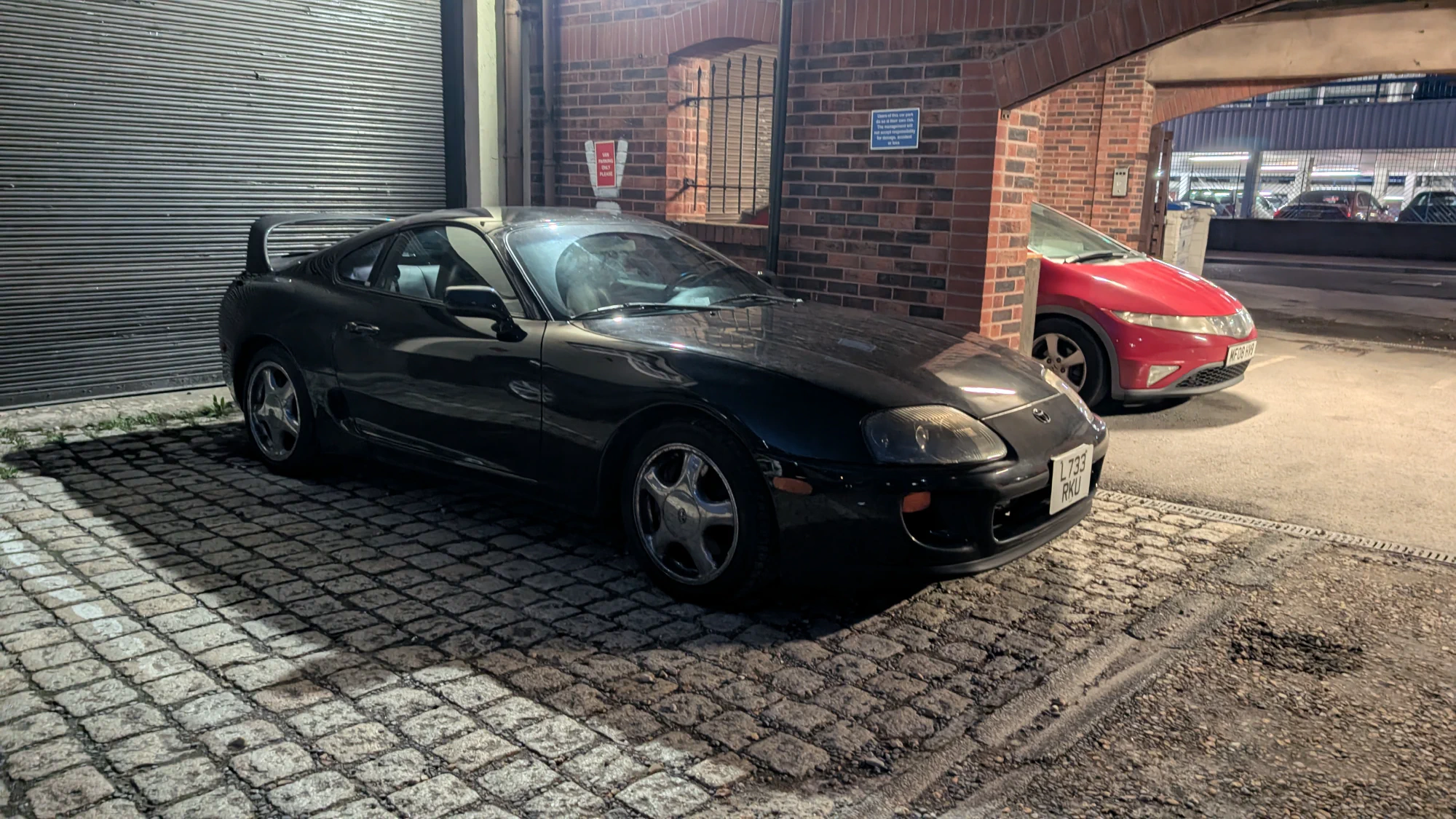
Back in California, still on UK plates
The car arrived safely at Port Hueneme. Customs had already been settled, including an unwelcome reciprocal tariff based on the car having been manufactured in Japan more than three decades earlier. Oh well.
I managed to hitch a ride down to the port overnight and reported to the main office. I’d applied for a TWIC card, which would let me access the port without an escort, but it hadn’t arrived in time. Instead, I hired a TWIC escort to take me in. After several hours of waiting around, I was finally reunited with the Supra. As far as I could tell, it had come through unscathed and looked much as I’d left it.
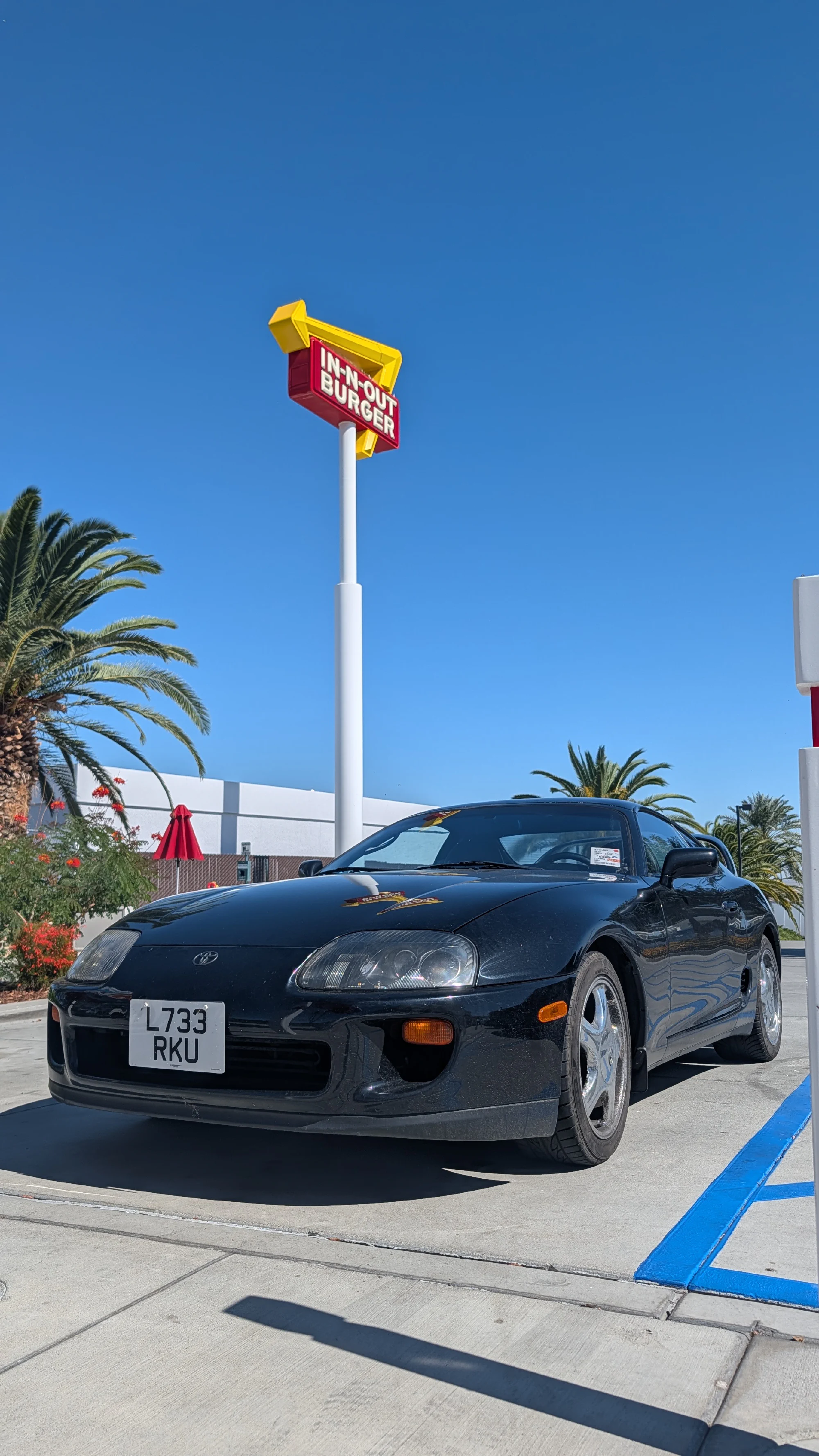
Now for the long drive home. I attached my DMV one-time permit to the windscreen and headed north towards I-5, still wearing UK plates. It was an insanely hot day, which made it a particularly bad time to discover that the A/C didn’t work.
Thankfully, the car held up better than I did in the heat. After an In-N-Out stop along the way, it got me safely back to Oakland, just in time for a smog test. Much to my surprise, it passed first time! Being an OBD-I car, the test was considerably more involved than simply plugging into a diagnostic port.
Two projects: the car and the paperwork
Once home, there were two big jobs: catch up on the maintenance and get the car looking good, and get it registered in California again.
The maintenance was laborious and snowballed into a major overhaul, but at least it was fairly predictable. The registration turned into a battle with the DMV’s Special Processing Unit in Sacramento. The UK registration recorded the chassis code instead of the VIN, and resolving that mismatch took a DMV vehicle inspection, a CHP inspection and numerous letters back and forth.
Roughly seven months later, the car finally had its California registration.
The upside, if you can call it that, was that the overhaul took almost as long. I fitted the work around evenings and the odd weekend, with parts overnighted from Japan on several occasions. There was always another job to do while the paperwork worked its way through Sacramento.
A fairly substantial overhaul
What began as catching up on deferred maintenance became an opportunity to sort out a lot of the things that age on a thirty-something-year-old car. Seals, cooling, suspension, brakes, electronics: the list kept growing.
Engine, cooling and A/C
- Timing belt and water pump.
- Valve stem seals and valve lash adjustment.
- New cam seals, front main seal and harmonic balancer.
- Valve cover gaskets, with the valve covers refinished while they were off.
- Spark plugs, coil packs and connectors.
- Alternator, power steering pump and A/C compressor.
- Radiator and A/C condenser.
- An A/C leak finally traced to a hard-line joint, which was replaced.
Suspension, brakes and the details
- HKS Hipermax S coilovers.
- New brake calipers, rotors and pads all round.
- New rear lights and LED projector headlight retrofits.
- A replacement power seat gear.
- New tailgate struts and cushions.
- New targa top seals.
- A respray for the front bumper, targa top and rear spoiler.
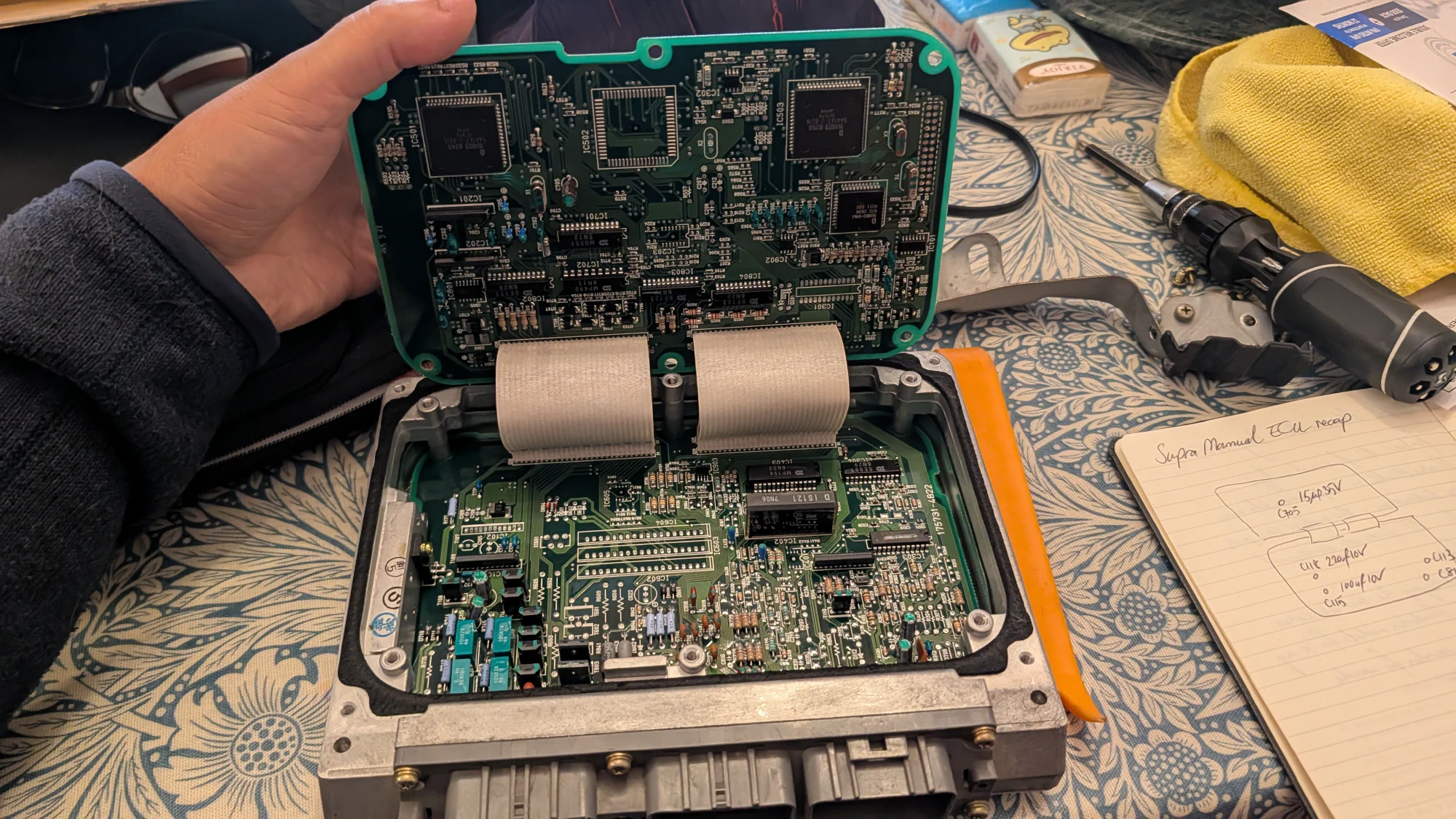
The electronics needed attention too. The old capacitors in the ECU and odometer were leaking, so both were refreshed with new ones. Not the most visible part of a restoration, but a satisfying thing to get sorted.
Keeping the original wheels
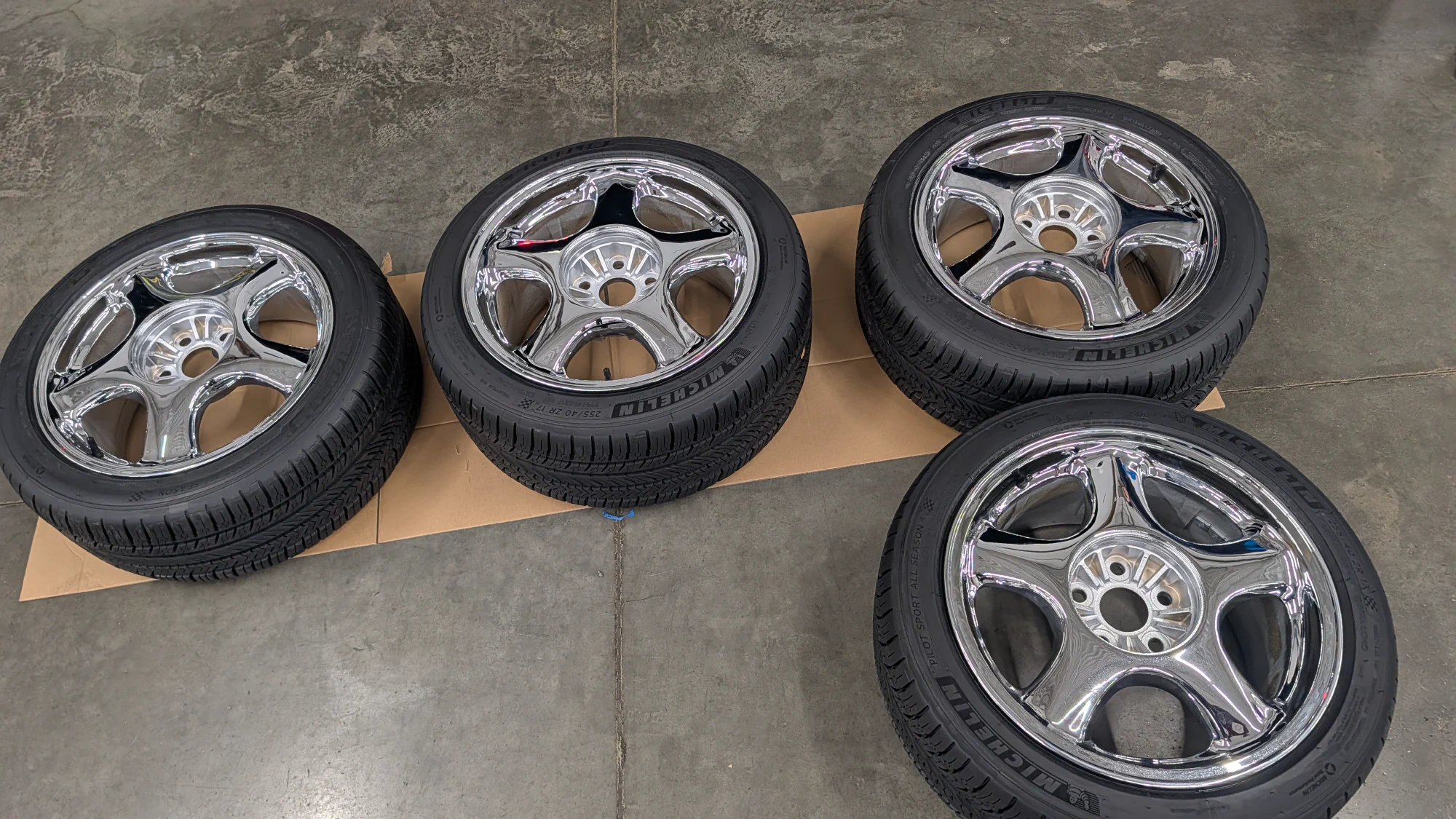
I wanted to preserve the car’s original look, and that meant saving the wheels. Finding someone to re-chrome them proved harder than expected. I eventually found a shop in San Diego; in my search, very few places seemed willing to take on something as large as a wheel.
It was worth the effort. With fresh chrome and new tyres, they looked a world away from the peeling, tired wheels I’d collected in the UK.
Some things were worth modernizing
One thing I wasn’t sentimental about was the 1990s aftermarket sound system. It really sucked. In its place went:
- A JL Audio VX1000/5i DSP amplifier, mounted neatly under the passenger seat.
- A Sony touchscreen head unit with Apple CarPlay and Android Auto.
- Focal Flax 165 coaxial speakers front and rear.
- A JL Audio 10W3v3 subwoofer in a Wicked CAS custom enclosure.
- A reversing camera.
- A Viper alarm and remote central locking system.
I wanted the car to keep its character, but I was very happy to bring this part of it into the present.
“IS THAT A SUPRAAA?!”
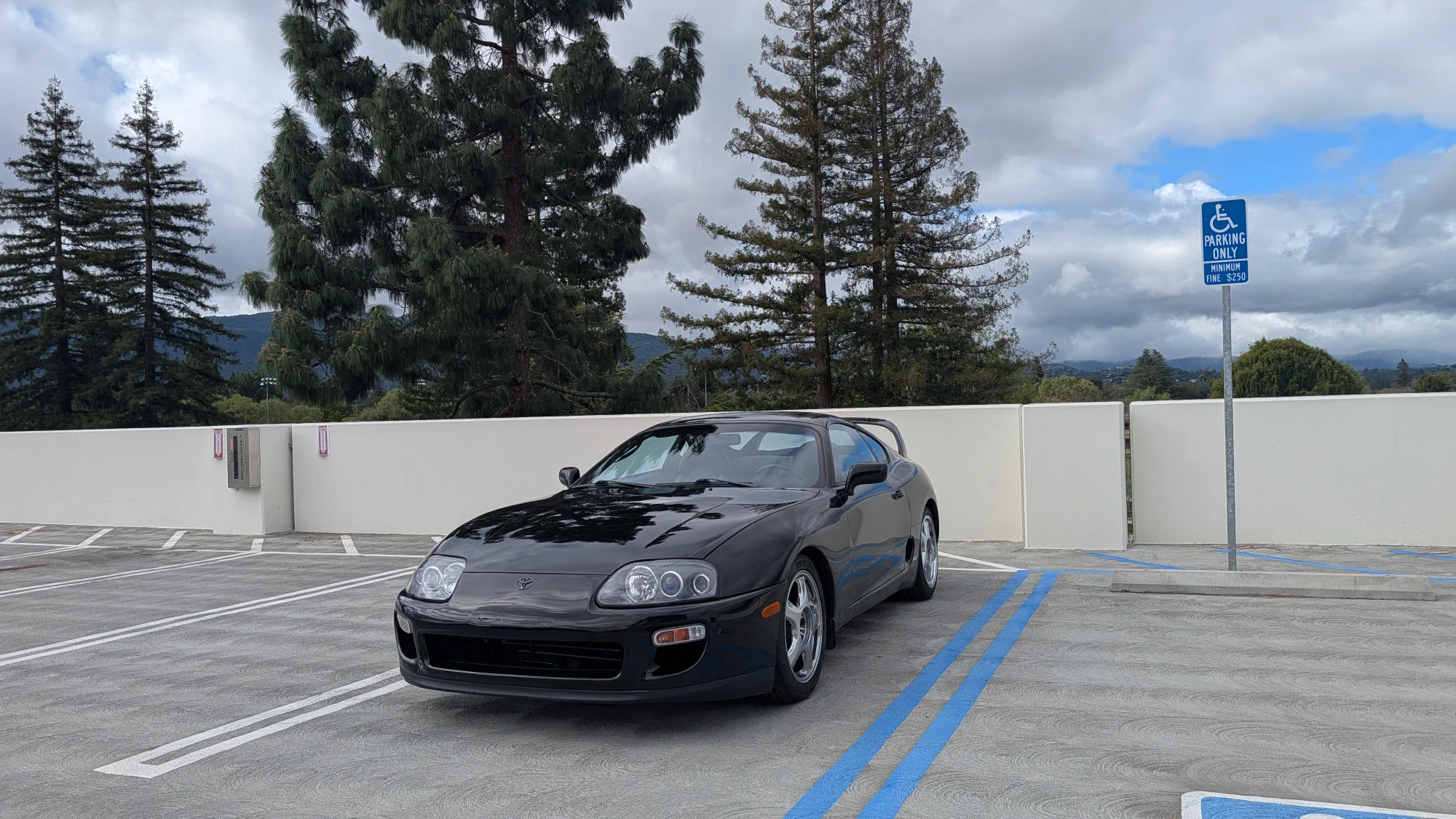
The car now looks great. In my admittedly biased opinion, the MkIV is one of the most iconic car designs ever, and it still feels timeless. It held its own at Monterey Car Week and gets a lot of attention on the road. Sometimes a little too much, with people rolling down their windows to ask, “IS THAT A SUPRAAA?!”
There’s still work to do, but it’s great to be back behind the wheel of a more interesting car. Getting this one home took an ocean crossing, months of paperwork and rather more wrenching than I’d initially imagined. I’m very glad I did it.